Anyway, it’s been a while since I posted on this blog as I have been busy with Halloween and the likes over at SM0D&L and trying to get MWiDP off the ground, as well as attempting to write and get on with the ‘behind the scenes’ stuff with Mark for our new digital bookstore, so please forgive me!
But here I am and so too is a new-found friend and fellow Saffite, Ray the Rat.
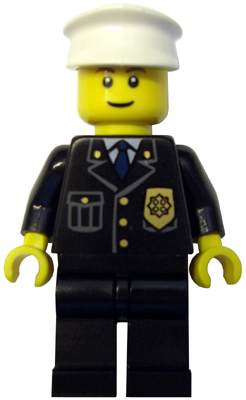
Ray and I have been conversing (virtually you understand) for some time now since he got in touch after reading Sugar & Spice and then Snow White. He has even helped out with answering a few police related questions for the books. He’s a nice guy; he also used to be a Bobby. Yup, a real-life policeman.
So, give that one of our vices is writing best-selling crime thrillers, I thought it might be nice to have Ray tell us about the real job of being a copper.
By his own admission, he isn’t a writer and he asked me to edit what he sent me, but I decided against it. So, in his own words, unedited and un spell-checked, here’s Ray:
Case stated Real Police work v the fictional police characters in books
Being an avid reader of crime books there is no comparison to doing the real thing. Having completed 35 years in the police it’s had its ups and downs but now retired it’s the people you worked with you miss the most. I can relate to many coppers in books however what these fail to show is the hard work and dedication show by many who serve our community. Many officers work together in either squads or on a fixed shift pattern so it was always imperative that loyalty and trust was there amongst the group. I was lucky throughout my service that those I worked with were a great bunch of colleagues. Competition amongst these groups was always ongoing and had a lasting effect on how we achieved our work.
For many officers work typically consists of routine tasks contrary to popular belief, paperwork consumes the majority of an officer’s day. It is imperative that records and reports of all incidents are maintained to a high standard to ensure that the end result is the right one. Having worked on a number of high profile cases the amount of papers these generate is totally unbelievable. In my early years as a detective I was lucky enough to work with a number of senior officers with years of experience who guided me through all the mechanics of the system although these days’ police tactics have evolved a lot quicker to meet criminal trends. Computer systems these days are highly technical and take onboard large quantities of data and assist in analyzing and profiling cases. One such piece of software is HOLMES 2 an investigation management system to assist law enforcement organisations in their management of the complex process of investigating serious crimes. It enables them to improve effectiveness and productivity in crime investigations, helping to solve crimes more quickly and improve detection rates.
| In 1986, UK Police Forces started to employ the original Home Office Large Major Enquiry System (HOLMES) in all major incidents including serial murders, multi-million pound fraud cases and major disasters the system was updated in 1994 and is now used by all UK Police Forces. |
In a typical major investigation, many documents, in the form of Statements, etc., are produced; all of these have to be carefully processed to ensure that vital clues are not overlooked.
I only wished that we had the system in 1987 when I joined the extremely large squad of officers and police staff covering the Kings Cross underground fire, this enquiry found myself working on the case for approximately three years. There were thousands of statements, exhibits and had two enquires running alongside each other, one the cause of the fire and secondary the identification of all the bodies. In the last six months I had the erroneous tasks of identifying the last body, looking back now how I could have done with the HOLMES system the amount of paperwork was unreal. I even resorted to physic help without success however that’s another story. Eventually some years later with the advent of DNA and some more paper shifting one of my senior colleagues identified the body.
One excellent crime book I have recently read is Fran Hiatt’s 24hours from Tulse Hill, very compelling but just how can one Detective Superintendent, a crippled Detective Sergeant on loan from the Metropolitan Police, and a Detective Constable solve a number of murders without a full major incident room and the use of the Holmes 2.
Of course the reason being it’s only a story and one can only use so many words, to include all the mundane procedures in the case would only leave the reader bored. Books must tell an intriguing story for its reader and therefore must be exciting and easy to read. TV serials and films are similar in that they try to cram in an entire case from scene discovery to investigation to interviews to suspect development to interrogation to arrest to charge to pre-trial negotiations to trial to verdict in the space of forty minutes. Even uncompressed, you can still tell that people are wearing the same clothes between events that should be separated by weeks; the season doesn’t change throughout the course of the process, and so on. Even painfully simple cases generally take weeks to months to dispose of. Murders and other serious crime will take years to clear. At the end of any successful major crime case the it’s the whole team of police staff who should be congratulated on their performance and this includes the senior officers, detectives, uniform officers, analysts, intelligence officers, surveillance officers, police civilian staff, and CPS staff.
Most factual accounts focus on exciting police activities like captures, shoot outs, and car chases while largely ignoring the mundane and routine or social work functions. Even documentaries are edited to contain the most interesting police encounters.
The news media also focuses on the issue of police misconduct. This is not difficult to explain given the news media’s self-proclaimed watchdog function, the fact that police have considerable discretion and are permitted to use weapons, and that police misconduct is a violation of public trust.
Crime is ideal for illustrating moral issues. Because we live in a society where the fear of crime is more prevalent than crime itself, that’s why novels, television and films on criminal activity are so popular.
The storyline in Sugar and Spice where the local sex offender Thomas Bristow is arrested by the Met Police and makes confessions under extreme conditions is a bit farfetched for me. Yes, perhaps many years ago but the introduction of PACE (The Police and Criminal Evidence Act 1984 and the PACE codes of practice provide the core framework of police powers and safeguards around stop and search, arrest, detention, investigation, identification and interviewing detainees) and CCTV in custody areas would not allow this type of practise. Yes we’ve had bent coppers in the force but with all the technology around these days it would be almost impossible to get away with it. Yes we strive to get a conviction but even today too many villains still get away.
I suppose many authors use a real person as a character in their books but they find ways to enhance the character so by the time this person is finished you would probably hardly recognise them. Most books invariably use murder as a crime the one for which there is no possible reparation for the victim and expiation for the perpetrator.
So what does a police officer do? Much time is spent responding to calls and patrolling. Some officers are also asked to do community policing. This is where an officer stays within a certain jurisdiction and builds relationships with individuals.
The role of a police officer is extremely important in today’s complex society where crime comes in forms ranging from minor disturbances involving out of control teenagers, to highly organised crime rings. At the most basic level, officers on street constitute a visual deterrent to opportunist criminals and provide a rapid response and support unit to victims of an actual crime or incident. Some officers are trained in both traditional, time honoured and state of the art technical detection techniques in order to uncover the perpetrators of complex; planned crimes. In dealing with criminals the role carries with it a high risk of danger. Specialist training, working in teams and both defensive equipment such as incapacitate spray, and protective vests help minimise the danger of personal injury but do not eliminate it, likewise nor do the extendable baton, speed cuffs and a secure personal radio.
A Police Officer’s daily responsibilities are varied and may change each day along with the situations encountered. In a normal day a Police Officer may have to perform any of the following duties: Meeting and conversing with local residents and small business owners, making enquiries into crimes, responding to emergency 999 calls, interviewing suspected criminals and witnesses to crime, providing emotional support to victims of crime, conducting searches for missing persons, giving evidence against criminals in court, providing security at accident sites such as fires and car crashes, providing extra security at large gatherings such as concerts, football matches and public celebrations, visiting the local community to educate vulnerable citizens about crime prevention, filling out reports, dealing with drunk, disorderly or violent offenders, arresting suspects and escorting them to the local police station for interview.
So what qualifications do we need: – No official qualifications are required to begin training as a Police Officer and each police force takes care of its own recruitment procedures. However you must: Be a UK citizen; be over the age of 18, pass background and security checks, declare any previous convictions, have a good standard of physical fitness and vision.
To be accepted onto the Police training programme you must first pass an aptitude test which focuses on areas such as decision making ability and communication skills. There is also a psychometric, a health and a fitness test.
The first two years as a Police Officer are spent training on the IPLDP (Initial Police Learning and Development Programme). This involves learning on the job as well as working towards an NVQ Level 3 in Policing with the requirement to attain a NVQ Level 4 in Policing around the end of the two year training period.
Over the years you develop the job skills i.e. dealing with the public, victims of crime and dangerous or potentially dangerous situations and people, requires a range of skills and abilities. The personal requirements of a Police Officer would include: Strong communication skills, the ability to empathise with or direct a conversation, the ability to keep a cool head in volatile or threatening situations, bravery in the face of danger but not headstrong stupidity, ability to make decisions quickly and prioritise when under pressure, discipline and the ability to follow orders and give them, good manners when dealing with the public, a sense of humour and a sense of dignity, an honest nature and a strong desire to help other people before oneself.
So to sum up real police work is phenomenally boring. You’re doing tremendous amounts of work to make tiny little breakthroughs. The crime writer on the other hand concentrates on the breakthrough moments, rather than all the boring, grinding work that goes on before these moments. All the writer and reader what’s to know particularly at a murder scene is who is there, who’s in charge, how many people are there, what happens first and then next, where does the body go next all the type of things that make the story real. Not that officers are taking statements, doing a reconstruction of the events, doing house to house enquires, ensuring the family of the victims are being given support and the hundred and one things going on back at the police station. Writers are there to tell a story and offer the reader a good piece of entertainment. That’s probably why all detectives are shown as being divorced because it is the reality, having drink problems because of the nature of the work i.e. Working long hours, seeing some of the nasty things we have to deal with and having to deal with loads of stress. I suppose at the end of the day it makes the detective in what every rank more interesting. The sweat and frustration, and the blind loyalty inside the service and the social difficulties outside it, the occasional successes the ever present problem of public relations all combine to give an in depth view of the police at work.
At the end of the day an author is similar in one way to a copper they both carry a notebook one to create a storyline or two, the other to record the factual evidence of an event or incident. All criminals are caught by taking statements not by reading books.
Making a case which will stand up in court and persuading the CPS to take to court and then securing a conviction. In true life it’s about identifying and charging the suspect, securing that conviction. It’s a few hundred statements, a few hours interrogating the suspect complying with Pace, then going to court having your own character torn to pieces by defending counsel and a fifty-fifty chance of success.
One last thought: the final piece of the jigsaw, the court case, this can be terrifying as the case can be won or lost at this last stage. Hardly any book I’ve read goes into this procedure most are complete when the arrest is made or in some cases the major suspect dies. Luckily I learnt my court procedure’s in the early days before the Crown Prosecution Service came into existence. My very first week as a probationary constable aged 19years, there I was standing on the steps leading up to court number one with my very first arrest, a young man I nicked for ABH (Actual bodily harm) plus numerous other officers with their prisoner’s, drunks, prostitutes, and all the low lifers who treaded the London streets. It was a real and frightening encounter but I managed to get through it and learnt many lessons of how to deal with the whole court experience. Something which the copper of day cannot do as the CPS now deals with cases and some officers can be out of their probation when they first go to court. One tip if you ever have to give evidence in court try to answer either yes or no, once you start to expand your answer, counsel will start digging into you.
Great to hear from a ‘proper copper’.
S’laters.







 Saffina Desforges